Panorama Ridge Gear: The 30km Alpine Loadout
Why standard day-hiking packing lists fail on a 30km route, and the exact footwear, thermal, and navigation systems required to survive the Garibaldi backcountry.
1. Panorama Ridge Gear: Footwear & Friction Management
Protecting your foundation for 30 kilometers.
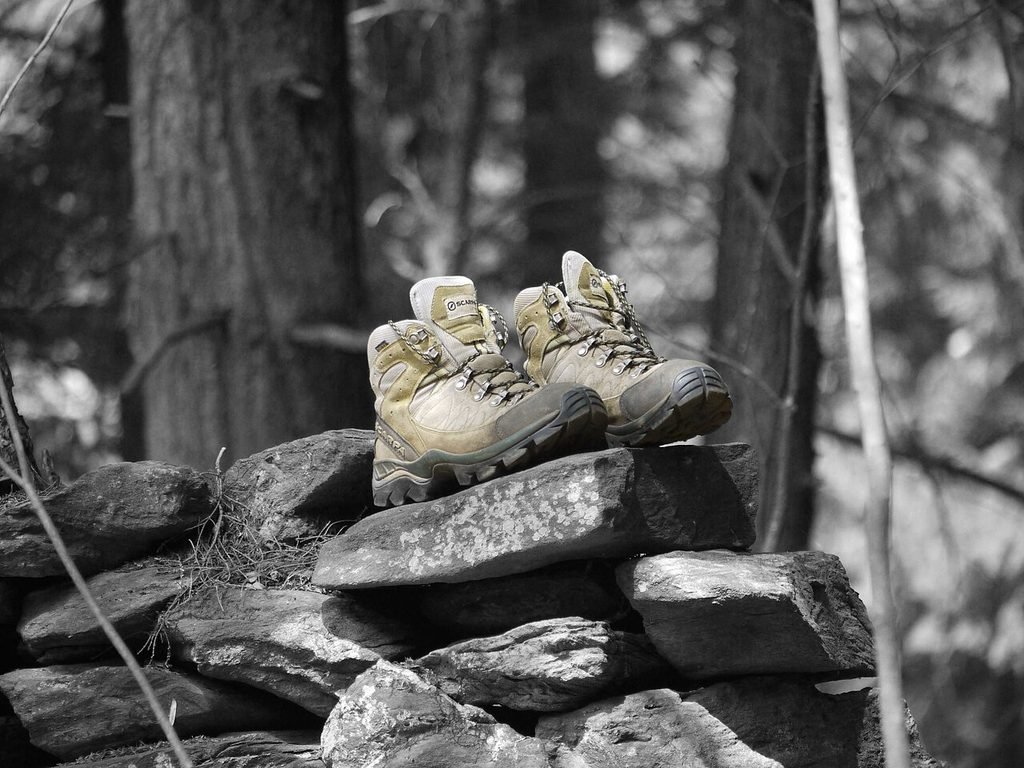
The most common point of failure on the Panorama Ridge gear list is footwear. Soft, flexible trail runners that feel great in the Rubble Creek switchbacks will leave your feet bruised and battered on the final alpine scramble.
- Rigid-Soled Boots: You need a boot with a stiff shank. The final push to the summit is pure volcanic scree. A rigid sole provides a platform to stand on sharp, shifting rocks without the pressure translating into your foot.
- Friction Defense: 30 kilometers of friction will create blisters if not managed proactively. Carry Leukotape to hot-spot your heels before they blister, and pack a fresh, dry pair of merino wool socks to change into at Taylor Meadows before the descent.
2. Panorama Ridge Gear: The Alpine Hauler
Carrying the load without crushing your pace.
When you are grinding up the final scree slope to the summit, every single ounce on your back feels like a lead weight pulling you backward. For an overnight push from Garibaldi Lake or a heavy, fully-equipped day trip, you need a pack that strips away the bulk without sacrificing the rigid frame.
The Suspension Trap: Soft, frameless daypacks will collapse under the weight of your required 2 liters of water, emergency winter layers, and first aid kits. Without a frame, that weight digs directly into your shoulders for 30 kilometers.
The Osprey Exos 58: At under three pounds, this pack features a tensioned mesh back panel that keeps the alpine sweat off your spine during the steep, suffocating switchbacks past Taylor Meadows. However, this is a specialized ultralight pack with a strict weight limit. If you pack heavy, the suspension will punish you. I recently took the Exos 58 on a brutal 8-day trek, overloading it to a staggering 55 pounds to see exactly where its breaking point was.
3. Panorama Ridge Gear: The Backcountry Recovery Bed
Surviving the night on wooden tent pads.
After 15 kilometers of uphill grinding and descending the volcanic scree of Panorama Ridge, your knees and lower back will be destroyed. If you are overnighting at Taylor Meadows or Garibaldi Lake, a minimalist, paper-thin foam pad won’t cut it. You need recovery.
The Hard Surface Reality: Both campgrounds utilize elevated wooden tent platforms to protect the fragile alpine ecosystem. While great for the environment, sleeping directly on rigid planks will expose every pressure point on your hips and shoulders if your sleep system fails.
The Big Agnes Rapide SL: This pad is essentially a backcountry orthopedic bed. Yes, at 18 ounces it is slightly heavier than the ultralight competition, but it boasts a massive 4.25-inch outer rail system and a thermal R-value of 4.8. The raised rails act as a cradle, keeping you centered on the mattress so you never slide off or bottom out against the hard wood. This allows your muscles to actually repair in the freezing alpine air before the long descent the next morning.
4. Panorama Ridge Gear: Thermal Layering Systems
Managing the valley-to-alpine microclimates.
You will start in a dense, humid forest and finish on a completely exposed, wind-scoured alpine ridge. Your clothing system must adapt dynamically. Cotton is a liability; if it gets wet from sweat, it will not dry, leaving you vulnerable to hypothermia at the summit.
- Moisture-Wicking Base: A lightweight synthetic or merino wool shirt to pull sweat off your skin during the grueling 7km switchback climb.
- Static Insulation: A packable down or synthetic puffer jacket. You will need this the exact moment you stop moving at the summit and your core temperature begins to plummet.
- The Hard Shell: A dedicated, windproof, and waterproof outer shell. The weather over Garibaldi Lake can turn violent with zero warning.
5. Panorama Ridge Gear: Redundant Navigation & Comms
Operating in a zero-signal environment.
Cellular service ceases to exist the moment you leave the Sea-to-Sky highway. Relying solely on Google Maps or a cellular-dependent app is a recipe for a search and rescue call.
- Primary Navigation: A GPS device or offline smartphone app with pre-downloaded topographical maps and route GPX files.
- Secondary Navigation: A physical, waterproof topographic map and compass. Electronics fail, batteries die in the cold, and screens shatter.
- Satellite Messenger: A Garmin inReach, Zoleo, or equivalent satellite communicator. If you or a hiker near you suffers a catastrophic lower-leg injury on the scree slope, this is your only lifeline to emergency services.
6. Panorama Ridge Gear: Hydration & Caloric Math
Fueling the 30km machine.
You cannot physically carry enough water to sustain the massive caloric effort required for this hike without weighing yourself down to the point of exhaustion.
- Water Filtration: Carry a minimum of 2 liters, but pack a hollow-membrane water filter (like a Sawyer Squeeze or Katadyn BeFree). You must refill and treat water at the Taylor Meadows campground or the streams feeding Garibaldi Lake.
- High-Density Fuel: Pack complex carbohydrates for sustained energy and rapid-absorption sugars (like energy gels) for the Phase 4 summit push. Crucially, bring electrolyte tablets to replace the heavy sodium loss you will experience on the ascent.
Stop guessing what to pack. Our Digital Basecamp includes an exhaustive, printable gear matrix, plus the exact high-resolution offline GPX files your redundant navigation system requires. [Button: Access the Digital Basecamp (In Development)]